

If you've spent any time researching how to straighten your teeth as an adult, you've probably come across two very different paths that seem to promise the same result: Invisalign and Smile Direct Club. Both use clear plastic aligners. Both advertise a straighter smile without traditional metal braces. And both have become household names in the world of teeth straightening. But the similarities mostly stop there, and the differences matter a lot more than most marketing materials let on.
At Smiles of Niles, we see patients regularly who tried a mail-order aligner kit first, didn't get the results they expected, and came to us afterward to fix what went wrong or finish the job properly. We also see patients who did their homework up front, understood the difference between doctor-supervised treatment and an at-home kit, and chose Invisalign from the start. This article breaks down what actually separates the two options, so you can make a decision based on facts rather than advertising.
This isn't about brand loyalty. It's about understanding what's happening inside your mouth during treatment, who is actually watching over that process, and what that means for your long-term oral health. Let's get into it.
How Invisalign and Smile Direct Club Actually Work
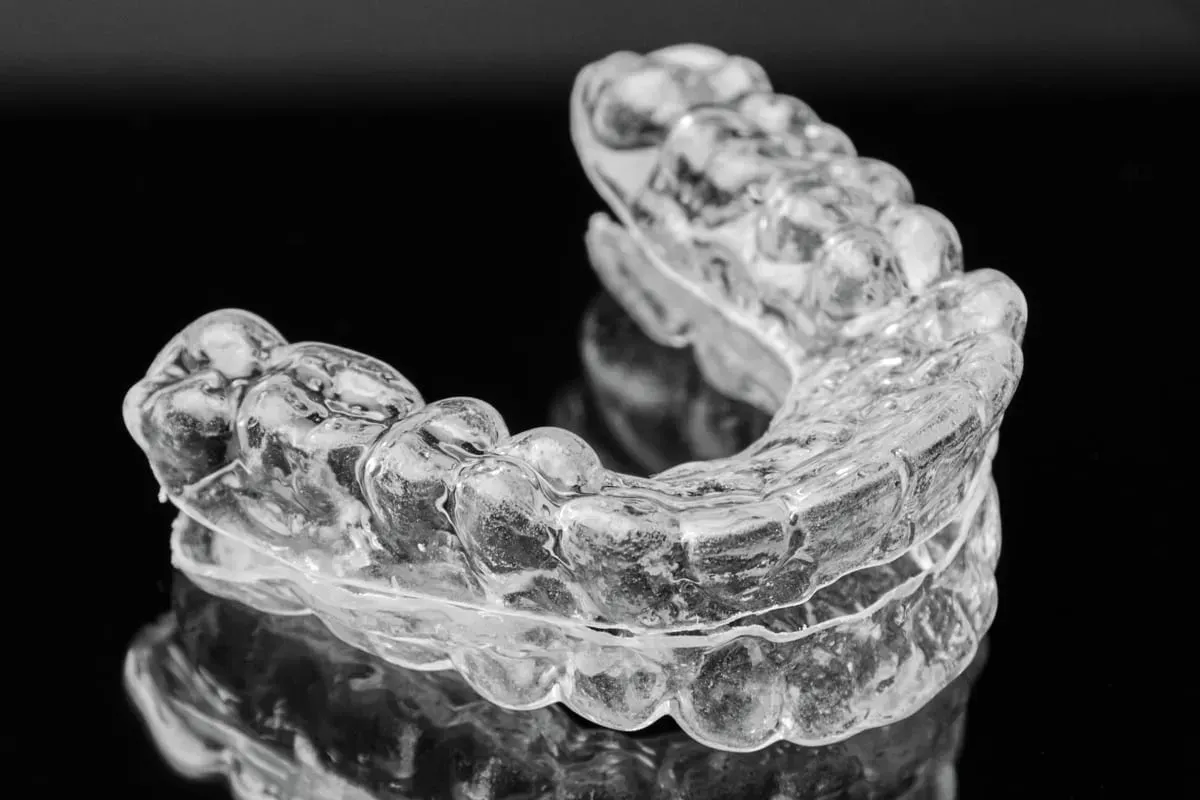
Both systems use a series of clear, removable aligners that gradually shift your teeth into a straighter position over time. You wear each set for about one to two weeks before moving to the next in the series, and the aligners apply gentle, continuous pressure to specific teeth. On paper, the mechanics sound nearly identical. In practice, the process behind designing and monitoring that treatment couldn't be more different.
Invisalign treatment begins with a comprehensive exam performed by a licensed dentist or orthodontist. That includes a full look at your teeth, gums, bite, and jaw alignment, along with digital scans or X-rays. From there, your dentist builds a custom treatment plan using Invisalign's software, often mapping out tooth movements for the entire course of treatment before a single aligner is made. You'll see your dentist periodically throughout treatment to confirm your teeth are tracking correctly and make adjustments if they're not.
Smile Direct Club, by contrast, was built around a direct-to-consumer model. Patients either take their own dental impressions at home using a kit or visit a retail location for a 3D scan, and that data is sent off to be reviewed remotely. There's no in-person exam, no X-rays as part of the standard process, and no hands-on evaluation of your bite or gum health before your aligners are designed. The entire relationship is built around convenience and distance rather than direct clinical oversight.
The Role of Professional Supervision During Treatment
This is where the two paths diverge the most, and it's the single biggest factor worth understanding before you commit to either one. Moving teeth is a medical process, not a cosmetic trick. Teeth are anchored in bone and surrounded by gum tissue, nerves, and a jaw joint that all need to be considered before you start applying sustained pressure to shift anything.
When you work with a dentist on Invisalign, that dentist is watching for problems the whole way through. Gum recession, bite changes, root health, and jaw discomfort are all things a trained eye can catch early, often before you'd even notice something feels off. If your teeth aren't moving the way the treatment plan predicted, your dentist can order a mid-course correction, called a refinement, to get things back on track. That kind of real-time problem-solving simply isn't built into a mail-order model.
With Smile Direct Club, oversight happens remotely, if at all, and typically through photos you submit yourself. There's no one in the room checking your gum health, verifying your bite is improving rather than getting worse, or catching early warning signs of a problem. For patients with mild, uncomplicated cases, this might go unnoticed. For patients with underlying issues they didn't know about, it can mean real problems go undetected until treatment is already finished.
Who Is Actually a Good Candidate?
Neither Invisalign nor an at-home aligner kit is right for every smile, but the range of cases each one can safely treat is very different. Invisalign, because it's guided by a dentist with full diagnostic information, can address a much wider variety of orthodontic issues. Smile Direct Club is designed specifically for mild cosmetic crowding or spacing in patients who already have generally healthy teeth, gums, and bite alignment.
The trouble is that most people don't actually know whether they fall into that "mild and uncomplicated" category until a dentist examines them. Issues like an open bite, an overbite, a crossbite, or uneven jaw growth aren't always obvious just by looking in the mirror, and attempting to correct crowding without addressing an underlying bite problem can sometimes make the bite worse rather than better.
- Mild crowding or spacing with a healthy bite: This is the profile most at-home kits were actually designed around, and it's where they tend to perform reasonably well.
- Moderate to complex misalignment: Overbites, underbites, crossbites, and significant crowding typically need the diagnostic depth and adjustability that only guided treatment provides.
- Existing dental work: Crowns, bridges, or a history of gum disease change how teeth respond to pressure, and that requires in-person evaluation before treatment starts.
- Jaw or TMJ concerns: Bite and jaw joint issues can be aggravated by poorly monitored tooth movement, which is exactly why hands-on evaluation matters here.
Comparing the True Cost of Each Option
On the surface, Smile Direct Club almost always looks cheaper, and the sticker price is a big part of why so many people are drawn to it. But the upfront cost only tells part of the financial story. Invisalign's price covers a full diagnostic exam, a custom treatment plan built from your actual mouth, ongoing visits with your dentist, aligner refinements if your teeth need extra adjustment, and a retainer at the end of treatment. All of that is built into the process from day one.
With a lower-cost direct-to-consumer kit, many of those same services are either unavailable or cost extra, and that's before accounting for the cost of fixing a problem that went unnoticed along the way. We've worked with patients who needed additional orthodontic treatment, periodontal care, or even restorative work after a DIY aligner experience didn't go as planned. When you add those expenses to the original cost of the kit, the final number often exceeds what Invisalign would have cost from the start.
It's also worth checking your dental insurance before assuming either option is out of reach. Many PPO dental plans offer orthodontic benefits that apply to Invisalign treatment supervised by a licensed dentist, which can meaningfully lower your out-of-pocket cost. Direct-to-consumer kits typically don't qualify for the same coverage, since there's no treating dentist of record submitting claims on your behalf.
Risks That Rarely Make It Into the Marketing
Smile Direct Club faced significant scrutiny over the years from both dental associations and consumer regulators, largely centered on the lack of in-person oversight and reports of patients experiencing tooth movement problems, bite changes, and in some cases permanent damage that went unaddressed until it was too late to easily correct. The company itself shut down its US operations in late 2023, which left a number of former customers without access to ongoing support or warranty service for treatment they were still in the middle of.
That history is a useful reminder of a broader truth: when a company's business model depends on removing the dentist from the equation, the patient absorbs more of the risk. Self-taken impressions can be inaccurate. Remote photo reviews can miss subtle but important changes. And if something does go wrong mid-treatment, there's often no one nearby who can physically examine your mouth and intervene quickly.
None of this means every at-home aligner experience ends badly, and plenty of people with genuinely mild cases have had uneventful results. But it does mean you're taking on a level of risk that simply doesn't exist with doctor-supervised treatment, and it's worth weighing that risk honestly against the cost savings before you decide.
Which Option Actually Fits Your Situation?
The honest answer is that it depends on what's actually going on in your mouth, and that's not something you can accurately assess on your own, no matter how straightforward your smile looks in the mirror. This is exactly why we start every Invisalign case at Smiles of Niles with a real exam rather than a questionnaire. We take digital scans, review your bite, check your gum health, and look at your dental history before we ever talk about aligner trays.
From there, we build a treatment plan designed around your mouth specifically, not a generalized protocol applied to everyone with similar crowding. You'll see us at regular checkpoints throughout treatment so we can confirm your teeth are moving as planned, make adjustments if needed, and catch anything unexpected early, while it's still easy to correct. When treatment wraps up, you'll also walk away with a retainer and a clear plan for keeping your results long-term.
If you've already looked into a mail-order kit and have questions about whether it's the right call for your smile, we're happy to walk through your specific case with you, no pressure involved. Sometimes a DIY option really is enough. Often, patients are surprised to learn their case needs more attention than they realized, and it's much better to find that out before treatment starts than after.
Key Takeaways
- Invisalign involves a dentist-led exam, custom treatment plan, and ongoing in-person monitoring; Smile Direct Club was built around remote, self-managed treatment.
- Mild crowding or spacing may be suitable for at-home kits, but moderate to complex bite issues typically need professional diagnosis and adjustable treatment.
- A lower sticker price doesn't always mean lower total cost once you factor in refinements, retainers, and potential corrective care.
- Without in-person oversight, problems like gum recession or bite changes can go unnoticed until they're harder to fix.
- A real dental exam is the only reliable way to know which treatment option actually fits your mouth.
Frequently Asked Questions
Is Invisalign more effective than Smile Direct Club?
Invisalign can treat a much wider range of cases because it's guided by a licensed dentist who evaluates your bite, gum health, and tooth position before and during treatment. Smile Direct Club was designed only for mild cosmetic adjustments in patients with an otherwise healthy bite, which limits how effective it can be for more complex misalignment.
Can I switch from Smile Direct Club to Invisalign mid-treatment?
Yes, and we see this fairly often. We'll start with a full exam to assess how your teeth have moved so far, then build a new treatment plan from that starting point. In many cases, we can pick up where things left off rather than starting completely over.
Does insurance cover Invisalign but not Smile Direct Club?
Many dental insurance plans that include orthodontic benefits will apply them to Invisalign treatment supervised by a licensed dentist, since there's a treating provider submitting claims and documentation. At-home kits generally don't qualify for the same coverage because there's no dentist of record overseeing the case.
How long does Invisalign treatment usually take?
Treatment length varies by case, but most patients complete Invisalign in about 12 to 18 months, with mild cases sometimes finishing sooner. Your exact timeline depends on how much movement your teeth need and how consistently you wear your aligners, which we'll go over during your consultation.
What happens if Smile Direct Club customers need follow-up care now?
Since the company's US operations closed in 2023, many former customers no longer have access to support, retainers, or warranty service for treatment they started. If that applies to you, we recommend scheduling an exam so we can assess your current tooth position and figure out the best path forward.
The Bottom Line on Choosing Between the Two
Straightening your teeth is a meaningful investment of time and money, and it's also a medical process that deserves real diagnostic attention, not a best guess made from home. Invisalign and Smile Direct Club might look similar in the box, but the difference lies entirely in what happens before, during, and after your aligners are made. One path puts a trained dentist in charge of monitoring your progress and catching problems early. The other asks you to manage that process largely on your own.
If you're weighing your options and want a straight answer about which one makes sense for your smile, that's exactly the kind of conversation we're set up to have at Smiles of Niles. A short exam can tell you far more about what your teeth actually need than any online quiz, and it's the best first step toward a result you'll be happy with for years to come.