


Every year, whitening strips, gels, pens, and charcoal powders promise the same thing: a brighter smile in a matter of days. Walk down any drugstore aisle and you'll find a dozen products claiming professional-level results at a fraction of the cost. It's an appealing pitch, and millions of people buy into it every single year.
But here's what most packaging won't tell you: teeth whitening is not a one-size-fits-all treatment, and its effectiveness depends heavily on factors that have nothing to do with which product you choose. The type of stain you're dealing with, the condition of your enamel, and even the natural color of your dentin all play a bigger role in your results than the whitening formula itself.
At Smiles of Niles, we talk to patients almost every week who tried an over-the-counter kit, felt disappointed by the outcome, and assumed something was wrong with their teeth. In most cases, nothing is wrong - they simply ran into one of the common limitations of whitening that we'll walk through in this article. Understanding these limits can save you money, protect your enamel, and help you set realistic expectations before you try again.
Not All Stains Respond the Same Way
The biggest misconception about teeth whitening is that it treats "yellow teeth" as a single problem. In reality, dental discoloration falls into two very different categories, and whitening products only work well on one of them. Extrinsic stains sit on the surface of the enamel and come from coffee, tea, red wine, tobacco, and certain foods. These respond reasonably well to whitening agents because the discoloration hasn't penetrated the tooth structure.
Intrinsic stains are a different story entirely. These form inside the tooth, below the enamel surface, often from childhood exposure to certain antibiotics, excess fluoride during tooth development, injury, or simply genetics. Whitening gels have a much harder time reaching and lifting stains that live inside the dentin layer. This is why two people can use the exact same whitening strip and see completely different results - one is treating a surface stain, while the other is fighting a structural one that bleaching agents were never designed to fully resolve.
This distinction matters because it explains so much of the frustration people feel after trying whitening at home. If your discoloration is intrinsic, no amount of extra treatments or stronger gel concentrations will get you the bright, uniform smile you're picturing. A dental exam can tell you, before you spend another dollar, which category your teeth actually fall into.
Your Enamel Thickness Sets the Ceiling
Enamel is naturally translucent. Underneath it sits dentin, a yellowish tissue that makes up the bulk of the tooth. When enamel is thick and healthy, it masks more of that yellow tone and whitening treatments have more surface area to lighten. When enamel has thinned from years of acid exposure, aggressive brushing, or simple genetics, more of the dentin shows through, and no whitening gel can compensate for that.
This is one of the least understood reasons whitening "doesn't work" for some people. It's not that the product failed; it's that the tooth's underlying structure was already showing more of its natural yellow-to-gray dentin color before treatment even began. Whitening can only lighten what's on the surface - it cannot rebuild or thicken enamel, and it cannot change the fundamental color of the tissue beneath it.
If you've noticed your teeth look more translucent at the edges or slightly gray rather than yellow, that's often a sign of enamel thinning rather than a straightforward staining issue. Our team can evaluate enamel health during a routine visit and let you know honestly whether whitening is likely to give you the improvement you're hoping for.
Why Over-the-Counter Kits Underdeliver
Drugstore whitening products are formulated to be safe for unsupervised use by the general public, which means their active ingredient concentrations are kept deliberately low. Most contain between 3% and 10% hydrogen peroxide or carbamide peroxide, compared to the 15% to 40% concentrations a dentist can safely apply under supervision. That gap in strength is the single biggest reason at-home results plateau so quickly.
Beyond concentration, there's also the issue of fit and contact time. Whitening strips and trays that aren't custom-molded to your teeth often leave gaps where the gel doesn't make even contact with the enamel, leading to blotchy or uneven results. A custom tray, fitted from an impression of your own teeth, keeps the whitening agent in consistent contact with every surface for the full treatment period.
- Lower peroxide concentrations mean the active ingredient simply doesn't have the strength to lift deeper or more stubborn stains.
- Generic tray or strip fit creates uneven gel contact, which shows up as patchy or inconsistent whitening across the smile.
- Shorter, less controlled treatment times reduce how much lightening actually takes place before the gel is rinsed away.
- No professional oversight means existing cavities, gum recession, or enamel wear can go unnoticed while gel is applied directly over them.
Why Results Fade Faster Than You Expect
Even when whitening works well initially, the results are not permanent. Teeth are porous, and those same pores that let whitening gel penetrate the enamel also let new stains back in. Coffee, tea, red wine, dark sauces, and tobacco use will gradually reintroduce color to the enamel surface, often within a few months of treatment.
Saliva composition, diet, and personal habits all affect how quickly this relapse happens. Someone who drinks coffee daily and doesn't rinse or brush afterward will see their whitening fade noticeably faster than someone with lighter staining habits. This isn't a flaw in the treatment - it's simply how enamel behaves, and it's the same reality whether you spent $20 on strips or $500 on an in-office treatment.
The practical takeaway is that whitening should be thought of as maintenance rather than a permanent fix. Most people benefit from touch-up treatments every six months to a year, paired with habits that slow staining between sessions, like using a straw for dark beverages and rinsing with water after coffee or wine.
Crowns, Veneers, and Fillings Won't Whiten
One detail that catches many patients off guard is that whitening agents only work on natural tooth enamel. Crowns, veneers, bonding, and composite fillings are made from porcelain or resin materials that don't respond to bleaching chemicals at all. If you have visible dental work in your smile line, whitening the rest of your natural teeth can actually create a noticeable mismatch.
This is a common reason someone whitens their teeth and comes away feeling like the results look "off" rather than improved. The natural teeth lighten while the crown or filling stays exactly the same shade it was before, and suddenly there's a visible line of demarcation that wasn't there when everything was uniformly stained.
If you have existing dental restorations in visible areas, it's worth having a conversation with our team before starting any whitening treatment. In some cases, we recommend whitening first and replacing older restorations afterward so the new work can be color-matched to your brighter, post-treatment shade.
What Actually Makes Professional Whitening Different
Professional whitening isn't simply a stronger version of the same drugstore product - the entire process is built around control and safety. Before any gel is applied, we examine your teeth for cavities, cracks, or gum recession, because whitening agents can cause significant discomfort if they reach exposed dentin or an area of decay. This step alone prevents the sensitivity issues that discourage so many people from finishing an at-home kit.
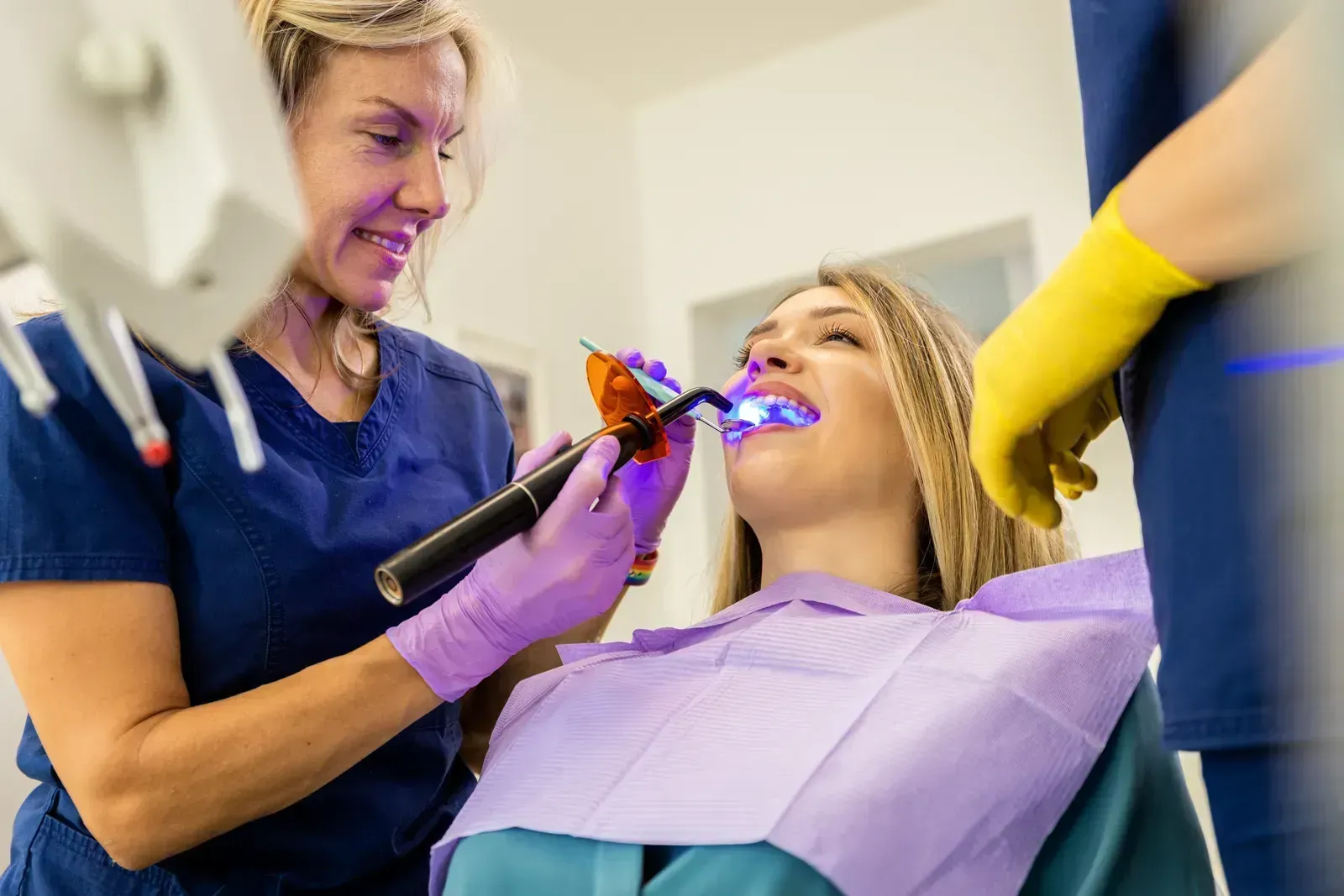
During in-office treatment, we also protect your gums with a barrier before applying a higher-concentration gel, which allows us to use a stronger formula without the irritation that would occur if it touched soft tissue unprotected. This is something a drugstore strip or tray simply cannot replicate, since there's no way to isolate and protect gum tissue with a generic, one-size-fits-all product.
Perhaps most importantly, professional whitening comes with a realistic conversation about what to expect. We'll tell you upfront whether your discoloration is likely to respond well, whether you have restorations that will need to be addressed separately, and how to plan touch-ups so your results last as long as possible. That honesty is worth more than any product claim on a box.
Key Takeaways
- Whitening works well on surface stains but has limited effect on intrinsic discoloration that forms inside the tooth.
- Enamel thickness sets a natural limit on how bright your teeth can become, regardless of the product used.
- Over-the-counter kits use lower peroxide concentrations and often fit poorly, leading to uneven results.
- Whitening results fade over time and should be treated as ongoing maintenance, not a permanent change.
- Crowns, veneers, and fillings don't respond to whitening agents, which can create visible mismatches.
Frequently Asked Questions
Why did my whitening strips barely change my smile?
It's likely due to either the type of stain you have or the strength of the product. Intrinsic stains sitting below the enamel surface don't respond well to the low-concentration gels found in most drugstore strips, no matter how long you use them.
How long do professional whitening results typically last?
Most patients enjoy noticeably brighter teeth for six months to a year before touch-ups are needed. The exact timeline depends on your diet, oral hygiene habits, and whether you use tobacco or consume a lot of dark-colored beverages.
Is teeth whitening safe for sensitive teeth?
It can be, but it requires a plan tailored to your situation. A dental exam beforehand identifies exposed dentin or gum recession, allowing us to adjust the gel concentration and application time to minimize discomfort while still delivering results.
Can whitening damage my enamel?
When used correctly and under professional guidance, whitening does not damage healthy enamel. Overuse or misuse of high-concentration products without supervision, however, can lead to increased sensitivity and, in rare cases, temporary enamel softening.
Should I whiten before or after getting a crown or veneer?
Whitening first is generally the better approach. That way, your dentist can match new restorations to your brightened, post-whitening shade rather than whitening around a fixed restoration color later on.
Setting Realistic Expectations for a Brighter Smile
Teeth whitening remains one of the most accessible and effective cosmetic dental treatments available, but effectiveness is relative to your starting point, not a guarantee stamped on every box of strips. Stain type, enamel condition, existing dental work, and daily habits all shape how much improvement you can realistically expect and how long that improvement will last.
The most reliable way to avoid disappointment is to have a conversation with a dental professional before investing time and money in a treatment that may not suit your particular smile. A quick evaluation can tell you which whitening approach fits your teeth, how bright a result is genuinely achievable, and how to protect that investment once treatment is complete.